
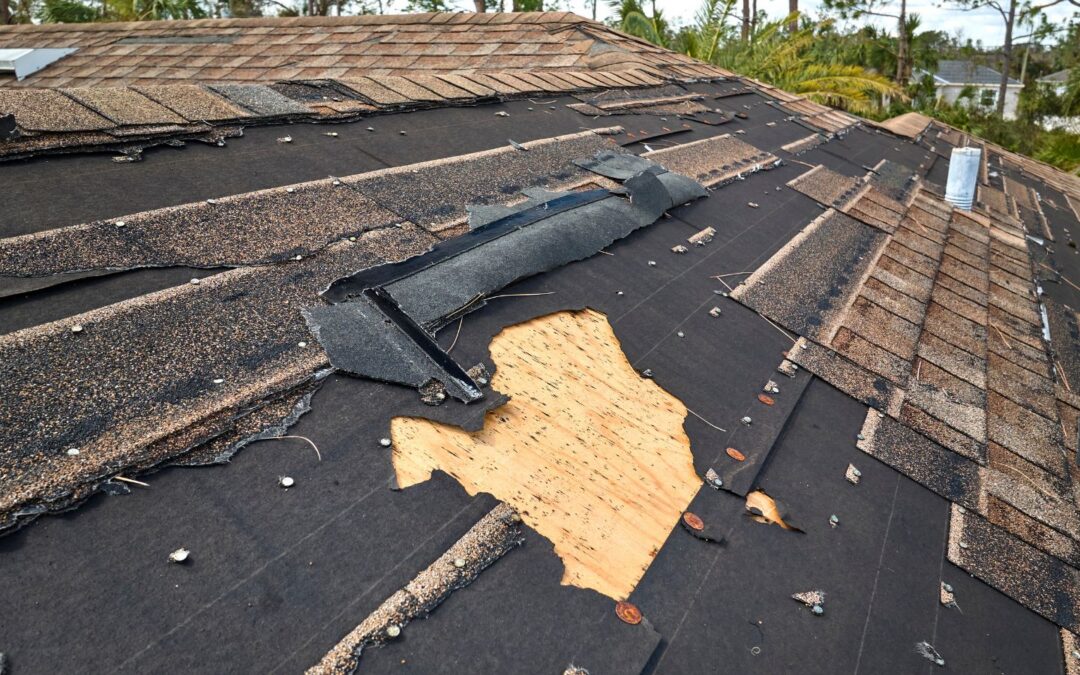
Most of the claims content aimed at roofing contractors focuses on hail — for good reason, since hail alley states generate the bulk of insurance restoration volume. But wind damage roof claims work differently, and hurricane season brings a distinct set of challenges that hail-focused processes don’t fully account for. Even in a quieter Atlantic season, Texas contractors are dealing with this reality directly: Tropical Storm Arthur made landfall near the Texas coast in June, and Tropical Storm Edouard came ashore close to the Texas-Louisiana border in September, both bringing damaging wind and heavy rainfall well inland. Understanding how wind claims differ from hail claims — and where they tend to get shortchanged — matters for any contractor working Gulf-adjacent or inland Texas markets during hurricane season.
Why Wind Damage Roof Claims Are Handled Differently
Hail damage is typically visible, discrete, and relatively straightforward to document — dents, bruising, and granule loss show up clearly on a roof surface. Wind damage is often more ambiguous. Missing shingles are obvious, but the damage that drives the real cost of a claim — compromised sealant strips, lifted or creased shingles that haven’t fully detached, and wind-driven rain intrusion under flashing — is easy for an adjuster to underestimate or miss during a quick inspection.
This ambiguity is exactly where wind claims tend to get underpaid. An adjuster who sees a few missing shingles and some minor cosmetic damage may approve a repair-level scope when the actual condition of the roof — creased shingles with broken seals across a wider area — warrants a full slope or full roof replacement. The National Hurricane Center’s storm reports are useful for establishing documented wind speeds in your area at the time of loss, which can support a claim when the visible damage doesn’t fully reflect the wind conditions the roof was actually exposed to.
Straight-Line Wind vs. Tropical System Wind Damage
Not all wind damage roof claims stem from hurricanes directly. Straight-line wind events, downburst activity, and the outer rain bands of tropical systems can all produce roof damage well before — or well outside — any hurricane makes landfall. Tropical systems moving through the Gulf frequently spin off severe thunderstorm activity and localized straight-line wind gusts hundreds of miles from the storm’s center, meaning inland Texas markets can see legitimate wind damage claims without ever being in a hurricane’s direct path.
This distinction matters for how a claim gets classified and adjusted. Documenting the specific weather event — whether it’s a named tropical system, a severe thunderstorm warning, or a straight-line wind report — gives the claim a clear causation record that supports the scope being requested. Vague or undocumented causation is one of the easier things for a carrier to push back on.
Documentation That Matters Most on Wind Claims
Because wind damage is less visually dramatic than hail damage, documentation needs to work harder to make the case. Key items to capture at inspection include:
- Creased or lifted shingles, even where the seal hasn’t fully released — photographed from an angle that shows the crease clearly
- Broken or compromised sealant strips across multiple shingles, not just the ones that have already blown off
- Evidence of wind-driven rain intrusion at flashing, valleys, and penetrations
- Missing or displaced ridge cap, hip cap, and starter shingles
- Debris impact damage distinct from the wind event itself, if applicable
- Documented wind speed data for the date and location of loss
The photo documentation approach that works for hail claims is a useful starting framework, but wind claims require additional attention to sealant condition and creasing patterns that aren’t always obvious in a general damage photo.
Matching Requirements Come Up More Often on Wind Claims
Wind damage frequently affects one or two slopes of a roof rather than the entire surface uniformly, which raises matching disputes more often than hail claims typically do. If a carrier approves replacement for only the damaged slopes and the remaining shingles are a discontinued color or profile, matching statutes and manufacturer discontinuation documentation become relevant to the supplement.
The Texas Department of Insurance publishes guidance on how matching requirements are handled under Texas policies, which is worth referencing directly when a carrier proposes a partial repair that would leave a visibly mismatched roof.
Where Wind Supplements Are Most Commonly Missed
Beyond matching disputes, wind damage roof claims tend to leave the same categories of missed line items that show up across insurance restoration work generally — code upgrades, overhead and profit, and detach-and-reset items — but with a few wind-specific additions worth flagging:
- Underlayment replacement where wind uplift compromised the water barrier beneath the shingles, not just the shingles themselves
- Flashing replacement at valleys and penetrations where wind-driven rain caused intrusion, even without visible exterior damage
- Fascia and soffit damage from wind uplift at the roof edge, which adjusters sometimes treat as a separate, unrelated repair rather than part of the same wind event
- Gutter and downspout damage from wind-driven debris or direct wind force
A thorough supplemental estimating process applies the same rigor to wind claims that it does to hail claims — reviewing the adjuster’s scope against actual field conditions and building a documented case for anything missing, rather than assuming the initial estimate captured the full extent of the damage.
Cash Flow and Timing Considerations Specific to Wind Events
Named storms and tropical systems can generate concentrated claim volume in specific counties over a short window, which puts the same kind of pressure on claims processing capacity that a major hail event does. The two-check structure covered in the RCV vs ACV breakdown applies just as directly to wind claims, and contractors working a concentrated wind event should plan for the same kind of claims processing bottleneck that high-volume hail seasons create.
Contractors in Texas Gulf Coast-adjacent and inland markets who take on wind damage work during an active tropical system should treat the claims and documentation side of the operation with the same urgency as crew scheduling. The same scaling principles that apply to hail season apply here — the estimating and supplement workflow needs to keep pace with the volume, or money gets left behind on claims that were otherwise straightforward.
What This Means for Contractors Working These Claims
Wind damage roof claims reward the same discipline that drives good outcomes on hail claims: thorough documentation, accurate causation records, and a supplement process that catches what the initial adjuster scope misses. The difference is in the details — sealant condition instead of granule loss, matching disputes instead of uniform slope damage, and wind speed reports instead of hail size verification.
TotalScope supports contractors across Texas, Oklahoma, Colorado, Nebraska, Kansas, and Wyoming on both wind and hail claims, applying the same estimating rigor regardless of what generated the damage. If you’re working wind claims from this year’s tropical activity and want a second look at how they’re being scoped, reach out and we’ll walk through it.
Frequently Asked Questions
How is wind damage different from hail damage on a roof?
Hail damage typically shows as visible dents, bruising, and granule loss across a roof’s surface. Wind damage often includes less visually obvious issues — creased shingles with broken seals, lifted starter or ridge shingles, and wind-driven rain intrusion at flashing and valleys — which can be underestimated during a quick inspection if the adjuster isn’t specifically checking for them.
Can inland Texas roofs be damaged by a hurricane that doesn’t make direct landfall nearby?
Yes. Tropical systems generate rain bands and can spin off severe thunderstorm activity and straight-line wind gusts well outside the storm’s direct path, sometimes hundreds of miles from where the storm makes landfall. Inland markets can see legitimate wind damage claims from a tropical system even without being in its direct path.
Why do wind damage claims get denied or underpaid more often than hail claims?
Wind damage evidence is often more subtle than hail damage, and adjusters working quickly can miss compromised sealant strips or creased shingles that haven’t fully detached. Without thorough documentation and, in some cases, wind speed data supporting the extent of exposure, carriers may approve a repair-level scope when the actual damage warrants full replacement.
What is a matching dispute in a wind damage roof claim?
A matching dispute arises when wind damage affects only part of a roof and the carrier proposes replacing only the damaged section, leaving discontinued or mismatched shingles on the rest of the roof. Many states have specific rules or guidance addressing when full replacement is required to maintain a reasonably uniform appearance.
Does the supplement process work the same way for wind claims as hail claims?
The underlying process is the same — reviewing the adjuster’s scope against actual field conditions and documenting anything missing or underpriced — but wind claims require attention to different specifics, including underlayment and flashing damage, sealant condition, and matching requirements rather than the hail-specific line items like granule loss and impact testing.